
CPT Code 00952 - Anesthesia for Vaginal Procedures
What will this article about 00952 CPT teach you?
CPT Code 00952 describes anesthesia services provided for vaginal procedures that require either colposcopy or hysteroscopy. It is used when an anesthesiologist, CRNA, or anesthesiology team supports gynecologic procedures in which visualization tools such as a colposcope or hysteroscope are necessary to evaluate cervical, vaginal, or uterine concerns. This guide explains the AMA definition, documentation requirements, diagnosis alignment, modifiers, bundling and payment considerations, RVUs, and the most common denial reasons—ensuring accurate claim submission for both payers and providers.
The Who, What, When for billing and paying for CPT Code 00952
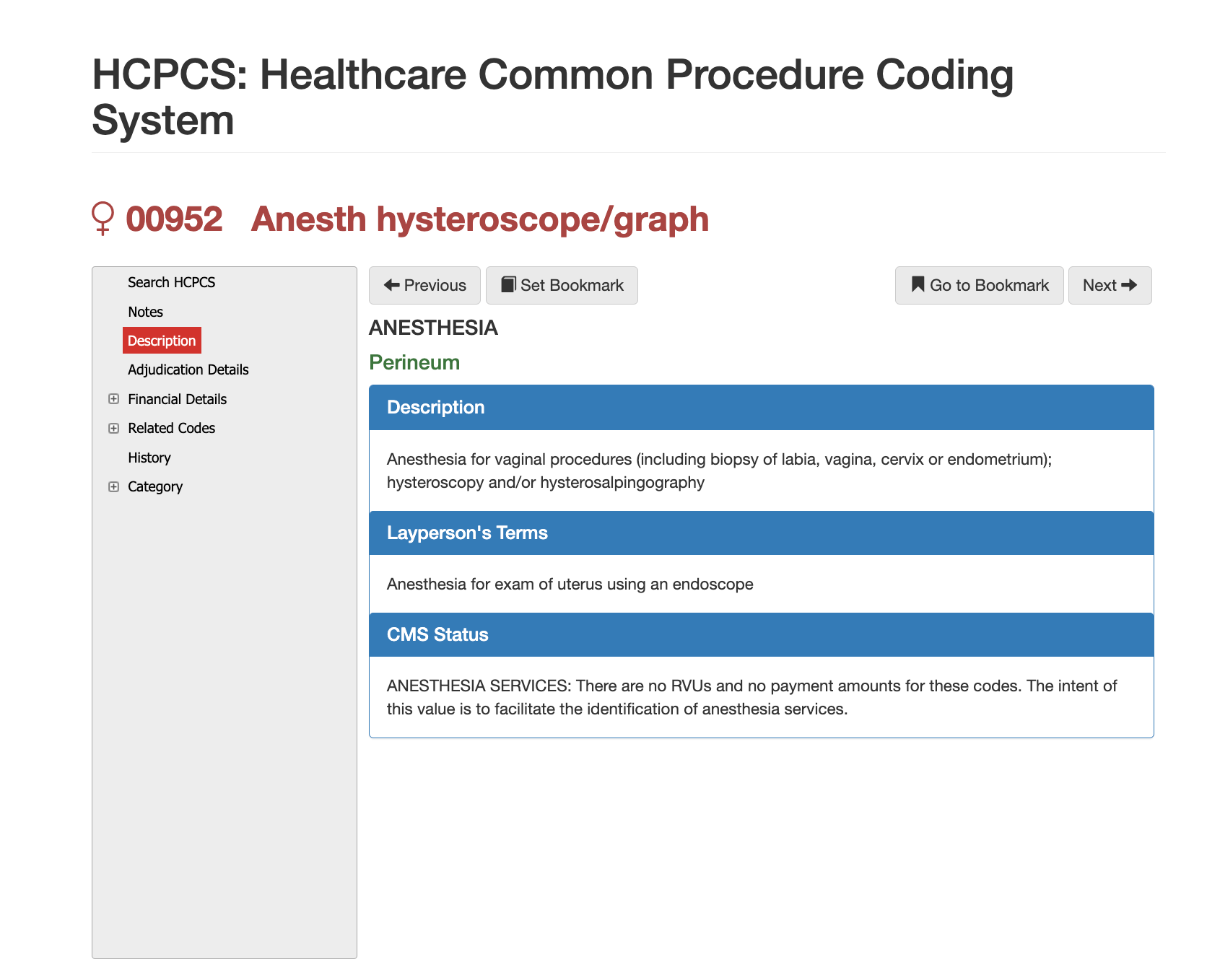
Definition of CPT Code 00952 - AMA vs Layperson:
The AMA classifies CPT 00952 as anesthesia for “vaginal procedures requiring colposcopy or hysteroscopy.” In simple terms, this code applies when a patient undergoes a vaginal exam or intervention that requires a camera-based instrument and cannot be performed safely without anesthesia. The anesthesia service covers pre-evaluation, continuous intraoperative monitoring, and postoperative care directly related to the procedure.
When is CPT Code 00952 Used?
CPT 00952 is reported when anesthesia is administered for vaginal procedures that require enhanced visualization through colposcopy or hysteroscopy. These procedures may involve diagnostic evaluation, biopsy, treatment of lesions, or assessment of abnormal bleeding. Anesthesia is typically required when patient tolerance, procedural complexity, or surgeon needs go beyond what can safely be managed with local anesthesia. This code applies strictly to vaginal procedures—if the surgical approach is abdominal, laparoscopic, or cervical-only, other anesthesia codes apply.
Claims reviewers validate that the operative report confirms a colposcopy or hysteroscopy was performed and that anesthesia services were medically necessary for the scope of work.
Who bills for CPT Code 00952?
CPT 00952 is billed primarily by anesthesiologists and certified registered nurse anesthetists (CRNAs), often in hospital outpatient departments and ambulatory surgery centers. It is also billed under anesthesia groups that provide services for gynecologic surgeons performing colposcopies, hysteroscopies, biopsies, or abnormal bleeding evaluations. Facilities may bill technical components, while anesthesiology providers submit professional claims. Supervising physicians may also appear as secondary billers depending on the anesthesia model used (medical direction vs. CRNA-only).
Top Diagnosis ICD-10 for CPT 00952
CPT 00952 is associated with gynecologic diagnoses that warrant colposcopic or hysteroscopic evaluation. Common ICD-10 categories include:
- Abnormal cervical or vaginal cytology
- Vaginal or cervical lesions
- Abnormal uterine bleeding
- High-risk HPV findings
- Suspicion of neoplasia
- Pelvic pain requiring diagnostic visualization
Claims may be denied when the diagnosis reflects a minor symptom or a condition unlikely to require vaginal procedures with advanced visualization or anesthesia.
Places of Service for CPT Code 00952
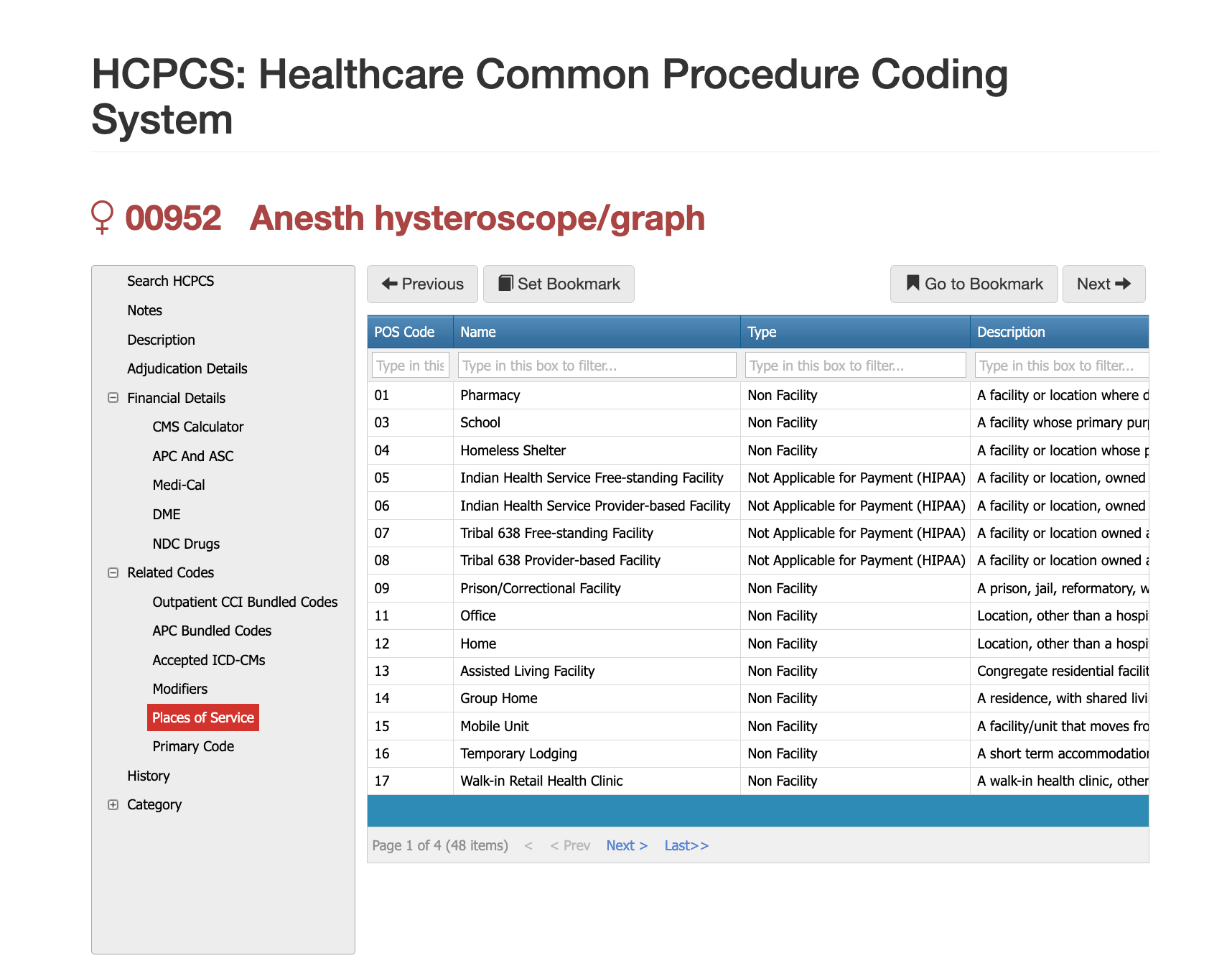
CPT 00952 most commonly appears in:
- Hospital Outpatient Departments (POS 22)
- Ambulatory Surgery Centers (POS 24)
- Hospital Inpatient Settings (POS 21) for more complex cases
It is not appropriate in office settings because vaginal procedures requiring colposcopy or hysteroscopy demand surgical-level equipment and monitoring. POS mismatches are among the top reasons anesthesia claims are suspended for manual review.
Proper Documentation for CPT Code 00952
Accurate documentation is essential because anesthesia billing depends heavily on time, complexity, and clinical justification. The anesthesia record should include:
- Pre-operative evaluation and risk assessment
- Start and stop anesthesia time
- Type of anesthesia administered
- Intraoperative monitoring details
- Procedure name confirming colposcopy or hysteroscopy
- Patient’s physiological status and comorbidities
- Any events or interventions during anesthesia
Payers often deny claims when the anesthesia time is incomplete, when the surgical note does not confirm the qualifying procedure, or when the documentation fails to support the level of service.
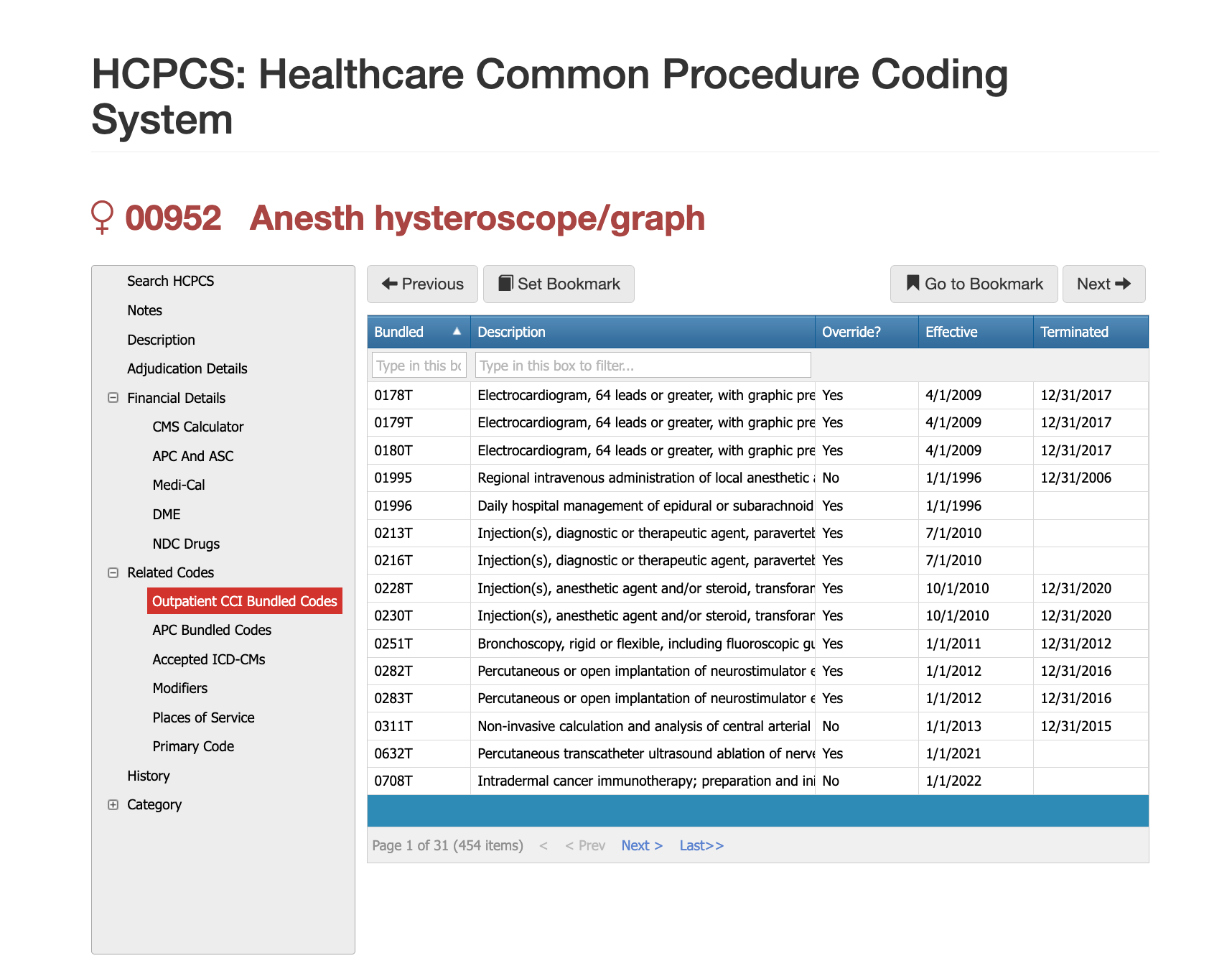
Bundled Codes for CPT Code 00952
CPT 00952 follows standard anesthesia bundling rules where:
- The anesthesia service must correspond to a qualifying surgical procedure
- Only one anesthesia code may be billed per surgical session
- Postoperative pain blocks may require additional modifiers if performed separately
- Anesthesia time must not overlap with another billed anesthesia service
CCI edits prevent duplicate reporting of multiple anesthesia codes for the same operative field. Because 00952 is specific to vaginal procedures with colposcopy or hysteroscopy, it should not appear alongside anesthesia codes for abdominal or laparoscopic approaches.
Virtual Examiner is particularly valuable here, as bundling errors are common when providers confuse diagnostic procedures with surgical colposcopy or hysteroscopy codes.
Related CPT Codes for 00952
Similar and related codes to CPT 00952 help clarify when anesthesia is tied specifically to vaginal procedures requiring colposcopy or hysteroscopy versus more general gynecologic or abdominal procedures. Understanding these distinctions prevents incorrect anesthesia code selection and avoids denials caused by mismatched procedural relationships. The table below outlines how CPT 00952 compares to nearby anesthesia codes that may appear similar but apply to different surgical circumstances.
| CPT Code | Descriptor | How It Differs From 00952 |
|---|---|---|
| 952 | Anesthesia for vaginal procedures requiring colposcopy/hysteroscopy | Base code for anesthesia tied to vaginal visualization procedures. |
| 940 | Anesthesia for procedures on the female genital system (not otherwise specified) | More general; used when no visualization tool like hysteroscopy is required. |
| 944 | Anesthesia for vaginal procedures requiring speculum, not hysteroscopy | Does not require colposcopy/hysteroscopy. |
| 840 | Anesthesia for intraperitoneal procedures | Used for abdominal—not vaginal—approaches. |
Modifier Guidance for CPT Code 00952
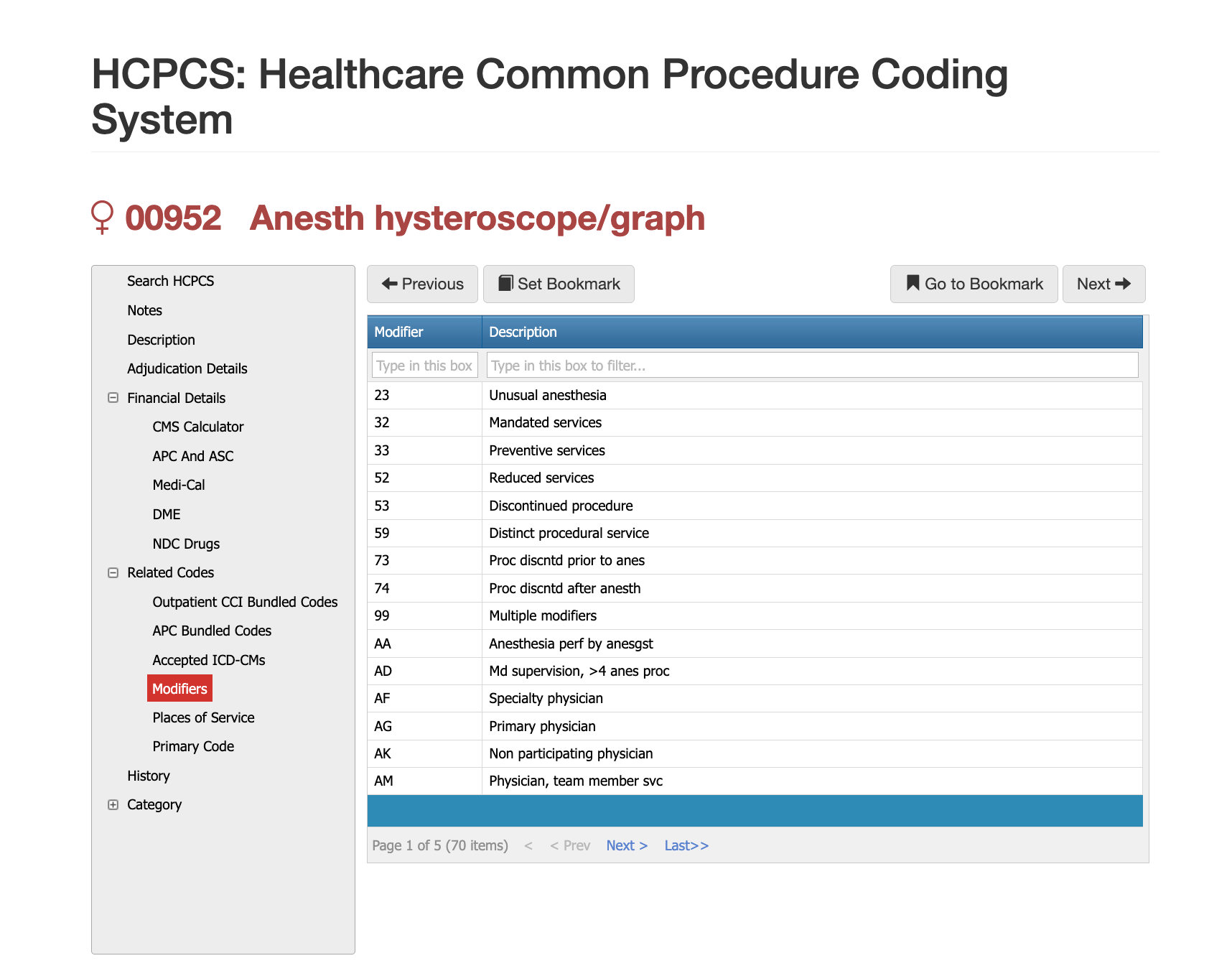
Modifiers for CPT 00952 clarify who provided the anesthesia service, whether medical direction was involved, and whether monitored anesthesia care (MAC) was required. The most commonly used include
AA for anesthesiologist-performed services,
QX or
QZ for CRNA involvement, and
QS when MAC is used instead of general anesthesia. Accurate modifier selection is essential, as incorrect reporting frequently leads to denials or payment reductions.
Modifier AA for CPT Code 00952
Used when a physician anesthesiologist personally performs the anesthesia service. Claims reviewers expect a documented pre-anesthesia evaluation and full intraoperative oversight.
Modifier QX/QZ for CPT Code 00952
Modifier QX is used when a CRNA provides anesthesia with medical direction from an anesthesiologist.
Modifier QZ applies when a CRNA performs the service independently, without direction.
Both require precise documentation of who delivered care.
Modifier QS for CPT Code 00952
QS indicates monitored anesthesia care when MAC—not general anesthesia—is used. Payers often request additional documentation to justify MAC for gynecologic procedures.
Modifier 23 for CPT Code 00952
Used when anesthesia services are significantly more complex due to patient condition or procedural difficulty. Documentation must explicitly describe the unusual circumstances.
Modifier 51 for CPT Code 20220
Modifier 51 is used when CPT 20220 is performed alongside other surgical or procedural services during the same encounter. Because secondary procedures typically reimburse at a reduced rate, payers use modifier 51 to adjust payment accordingly. Documentation must show that the biopsy required additional work beyond the primary procedure.
Most Common Reasons for 20220 CPT Denials
Denials for 00952 generally occur when:
- The surgical claim does not support a qualifying colposcopy or hysteroscopy
- Anesthesia time is incomplete or missing
- Incorrect modifier selection masks the person who performed anesthesia
- The diagnosis does not justify anesthesia for the documented procedure
- CCI bundling edits conflict with other reported anesthesia services
Clear linkage between the procedure, anesthesia note, and diagnosis prevents most payment issues.
RVUs and Financials for CPT Code 20220
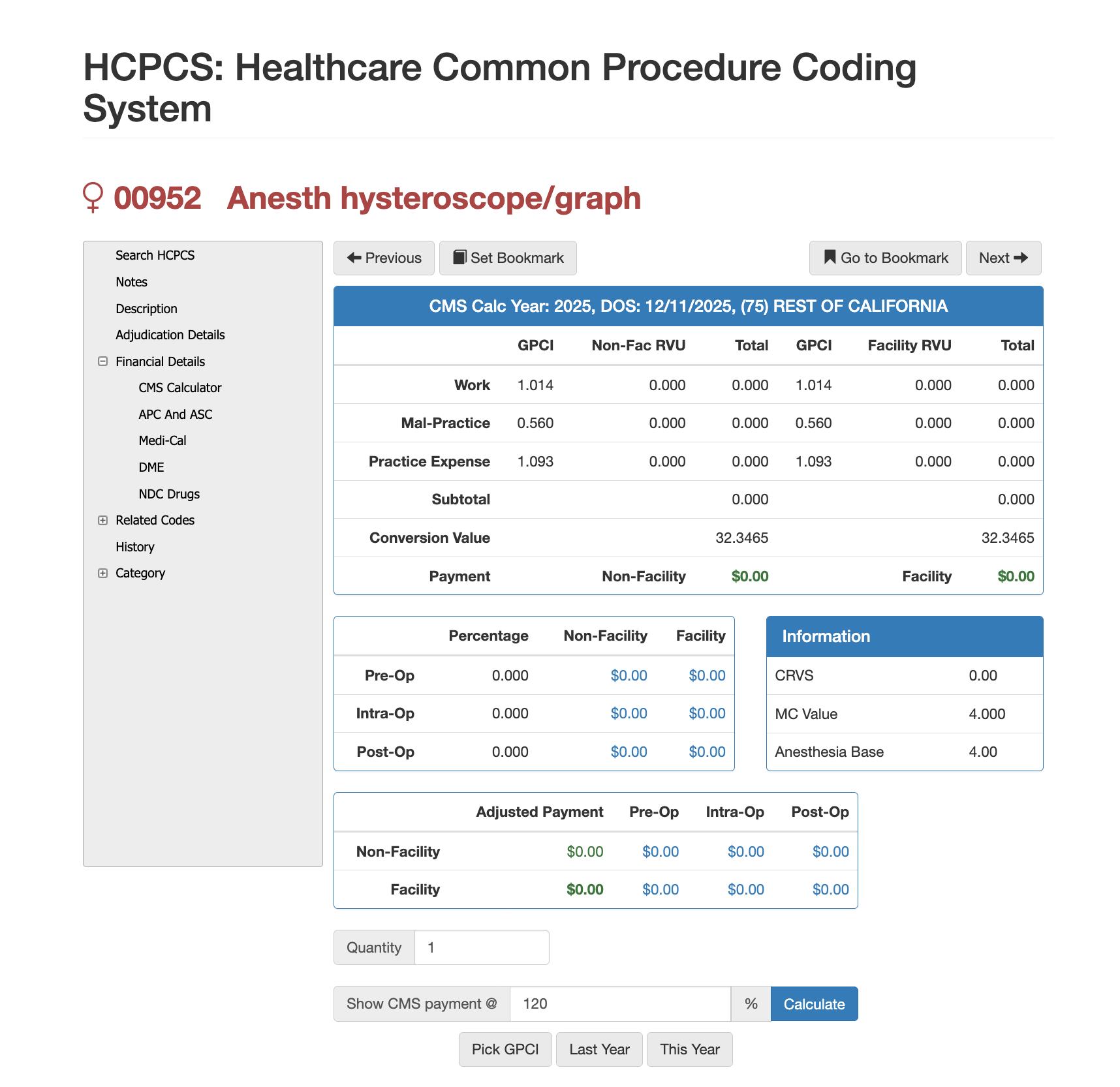
RVU Negotiation Guide for CPT 00952
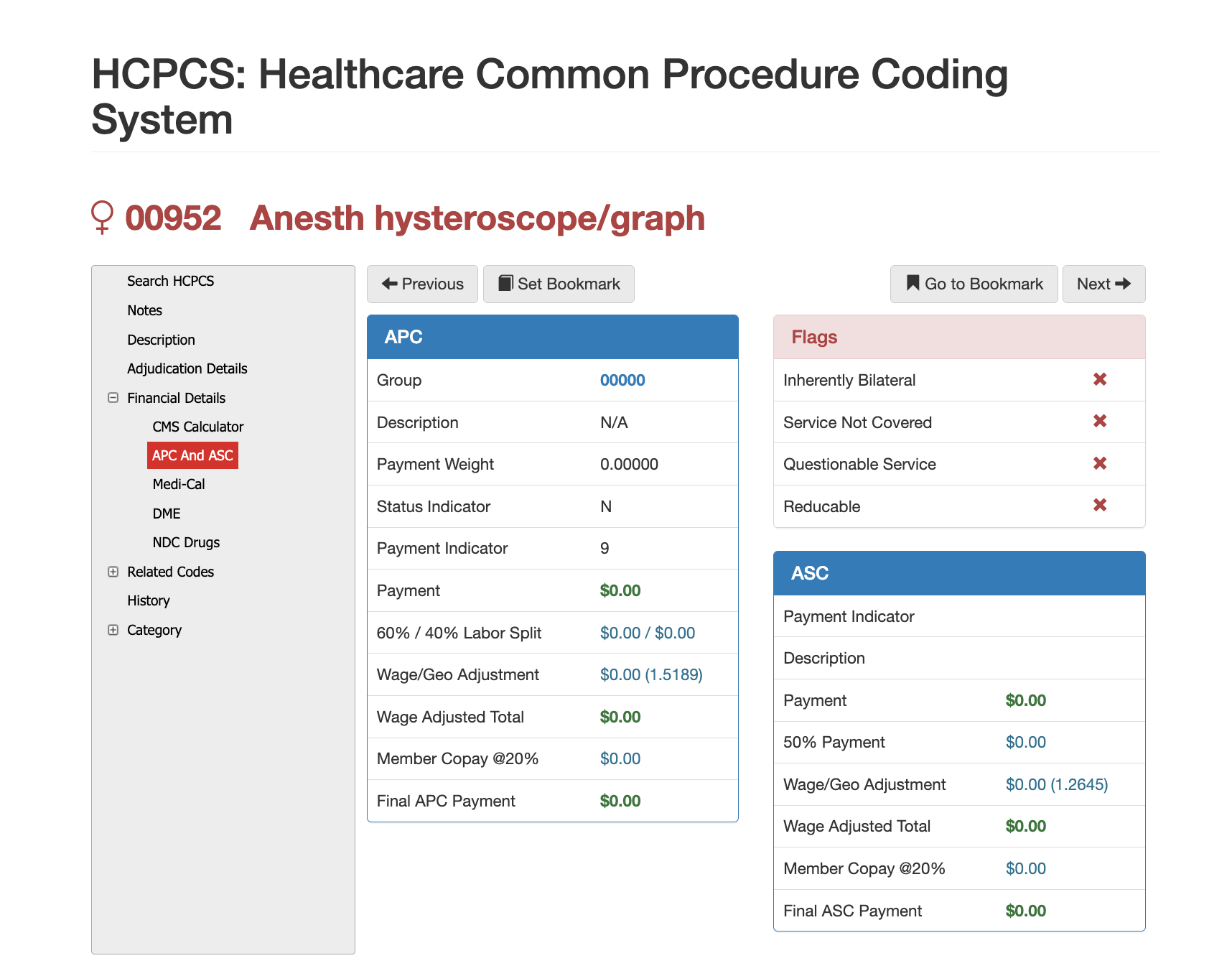
Reimbursement for CPT 00952 depends on anesthesia base units, time units, and modifying circumstances. Base units differ between colposcopy- and hysteroscopy-related procedures, and time-based billing requires precise start and stop documentation. Using Virtual AuthTech or iVECoder, users can simulate reimbursement at various Medicare percentages, analyze facility vs. non-facility impacts, evaluate out-of-network rates, and confirm compliance with anesthesia payment rules. These tools ensure both payers and providers avoid overbilling, underbilling, or misclassification of anesthesia time.
The Easier Way to Research codes
For more than 30 years, PCG Software has supported Health Plans, MSOs, IPAs, TPAs, and provider organizations in improving coding accuracy, strengthening compliance, and reducing fraud, waste, and abuse. Our solutions, including Virtual Examiner®, VEWS™, and iVECoder®, are built on decades of payer-side adjudication experience and reflect the same logic used by health plans nationwide. National regulatory guidance, payer policies, compliance standards, and large-scale claims review patterns inform this CPT 69210 analysis.
Toss out the CPT book.
Stop researching articles.
Sign up for iVECoder today!
About PCG
For more than 30 years, PCG Software has helped health plans, provider organizations, and delegated entities improve coding accuracy, payment integrity, compliance, and fraud, waste, and abuse detection through payer-focused software and claims auditing expertise.
Click to share with others